
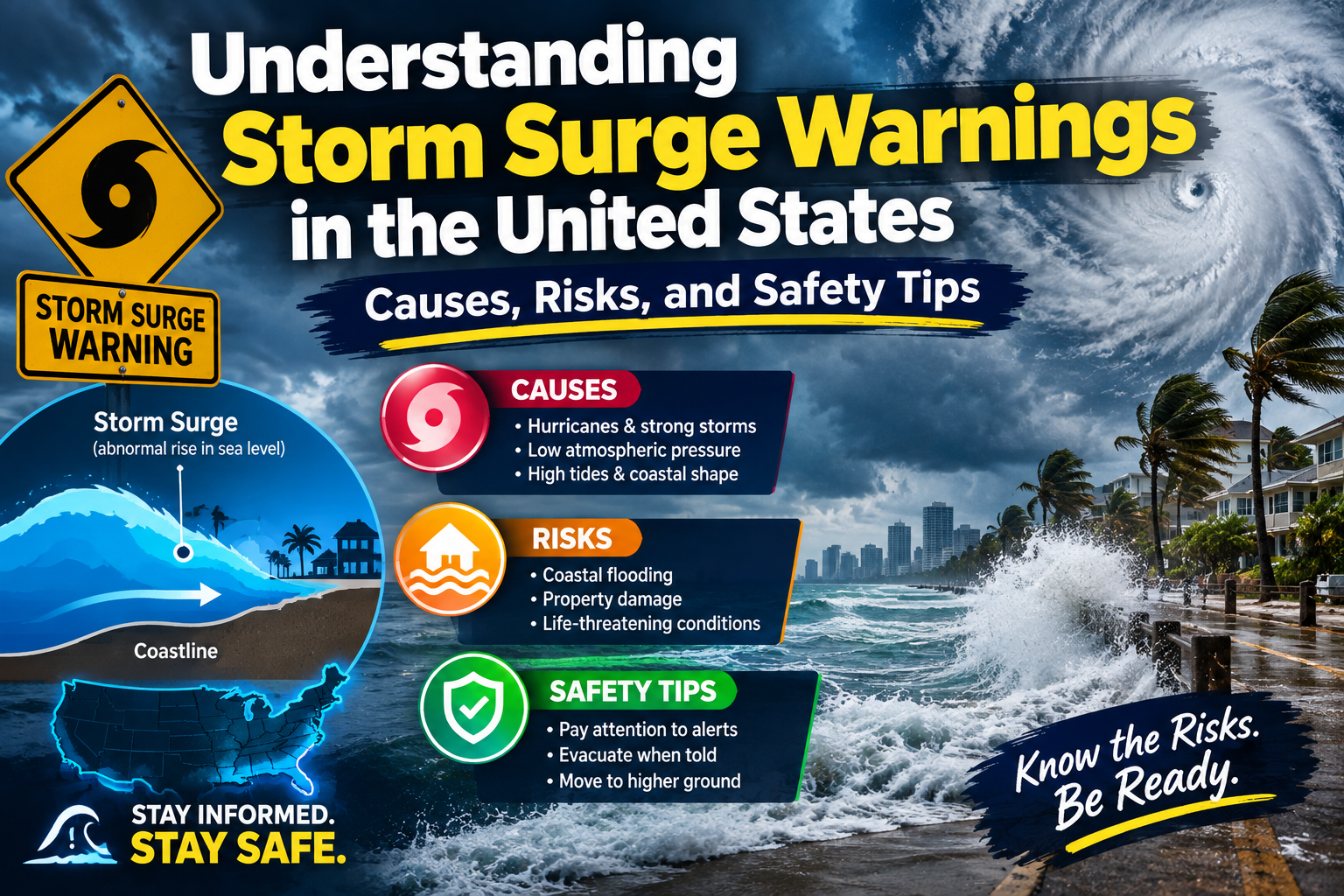
When most people picture hurricane danger, they picture wind. In reality, storm surge — the rise of ocean water pushed onshore by a storm — has historically caused a large share of hurricane-related deaths in the United States, more than wind or even inland flooding in many storms. Understanding what a storm surge warning actually means could be the difference between an inconvenient evacuation and a life-threatening situation.
What Is Storm Surge, Exactly?
Storm surge is the abnormal rise of seawater generated by a storm, over and above the regular predicted tide. It happens because a hurricane or tropical storm’s powerful winds push a massive dome of ocean water toward the coastline, and that water has nowhere to go but inland. In a strong storm, surge can raise coastal water levels by 10, 15, even 20+ feet above normal, turning streets, neighborhoods, and entire coastal towns into open water within hours.
The danger is compounded by the fact that storm surge often arrives before the strongest winds do, catching people off guard if they’re only paying attention to wind forecasts.
Storm Surge Watch vs. Storm Surge Warning
The National Weather Service and the National Hurricane Center (NHC) use two distinct alerts for storm surge, and the difference matters for how you should respond:
- Storm Surge Watch: There’s a possibility of life-threatening inundation from rising water, generally issued 48 hours before the anticipated onset of surge.
- Storm Surge Warning: There is a danger of life-threatening inundation from rising water in the indicated area, generally issued 36 hours ahead of when surge conditions are expected to begin.
These alerts can be issued for storms that haven’t fully organized into a tropical cyclone yet, and can even remain in effect for storms that have weakened past tropical cyclone status but are still producing dangerous surge and flooding — because the water doesn’t calm down just because the storm’s official classification changes.
Why Storm Surge Is So Deadly
A few specific reasons storm surge causes so much harm:
- It moves fast and rises unpredictably. Water can rise several feet within an hour in some locations, giving people far less warning than they expect.
- It’s disorienting. Storm surge often arrives at night or is combined with heavy rain, making it hard to gauge how quickly water is actually rising around you.
- Cars are not safe transportation once surge begins. Just 6 inches of fast-moving surge water can stall a vehicle, and 2 feet can float most cars entirely — meaning evacuation has to happen well before surge starts, not during it.
- It affects areas people assume are “safe.” Surge can travel miles inland along rivers and low-lying terrain, well beyond the immediate coastline, which is why storm surge warnings often cover a wider area than people expect.
How to Actually Prepare and Stay Safe
Know your evacuation zone before hurricane season starts. Every coastal county has a specific evacuation zone system — knowing yours in advance means you’re not scrambling to find this information as a storm approaches.
Take the watch stage seriously, not just the warning. Waiting until a warning is issued can mean you’re evacuating with far less time and far more competition for roads and fuel.
Never drive through standing or moving surge water. “Turn around, don’t drown” applies just as much to surge as it does to flash flooding — the depth and current are almost impossible to judge accurately from inside a vehicle.
Follow local officials’ instructions over general forecasts. Local emergency management has information about specific flood-prone streets, low bridges, and evacuation routes that a national forecast simply can’t capture.
Prepare for extended power and access loss. Surge damage frequently knocks out power and blocks roads for days, so basic hurricane preparedness — batteries, water, medication, charged devices — matters just as much for surge as for wind damage.
The Bottom Line
Storm surge is one of the most underestimated hazards in U.S. hurricane season, precisely because it doesn’t get the same visual drama as high winds on the news. If you live anywhere near the coast — even areas that don’t feel like “beachfront” — knowing the difference between a storm surge watch and warning, and having an evacuation plan ready before hurricane season peaks, is one of the most important pieces of safety knowledge you can have.